
On this page
Other services
Need a survey?
Tell us the objective and the site. We’ll recommend the method and scope.
Methods
Choose the method for each objective
With depth
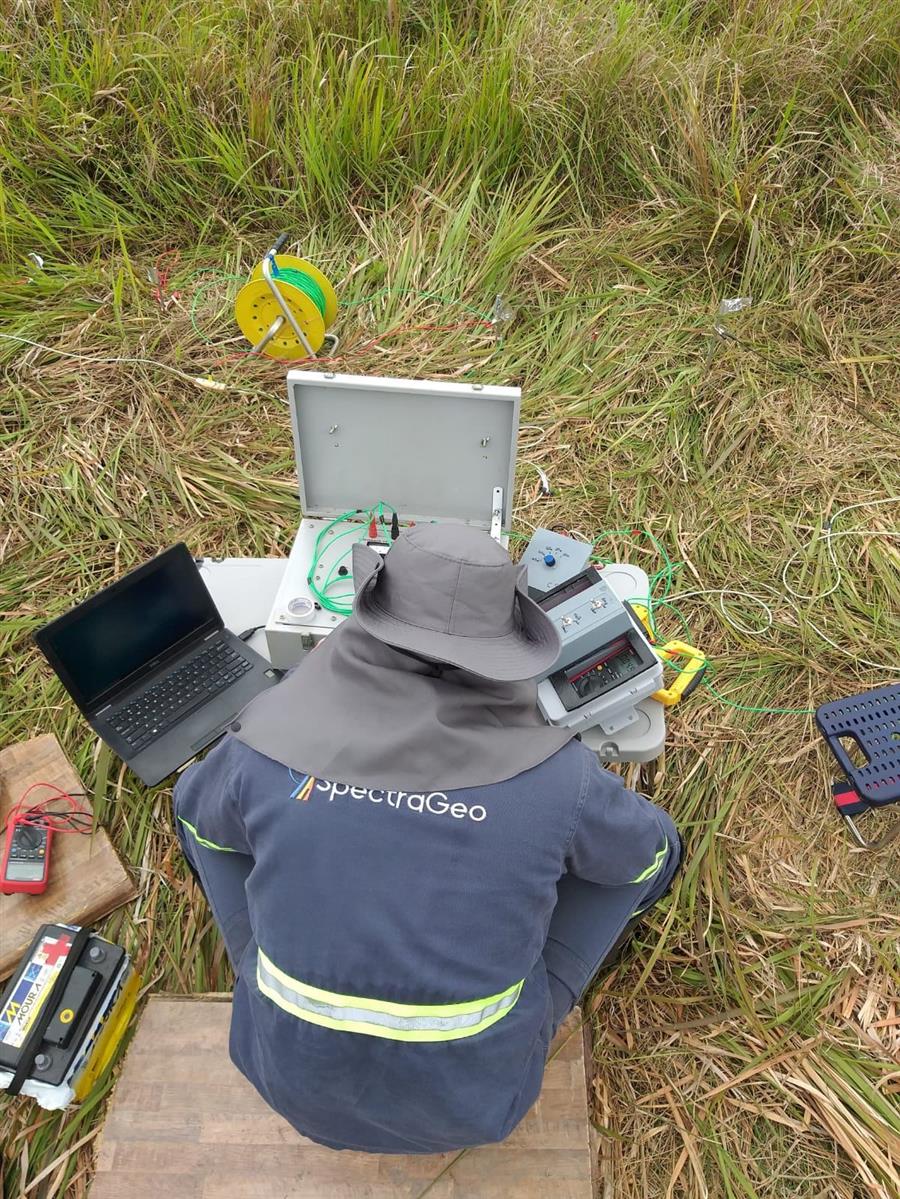
Vertical Electrical Sounding (VES)
Shows how resistivity changes with depth at a given point.
Basis for: grounding grid design and groundwater investigation.
Delivers: layered resistivity model
Along a line
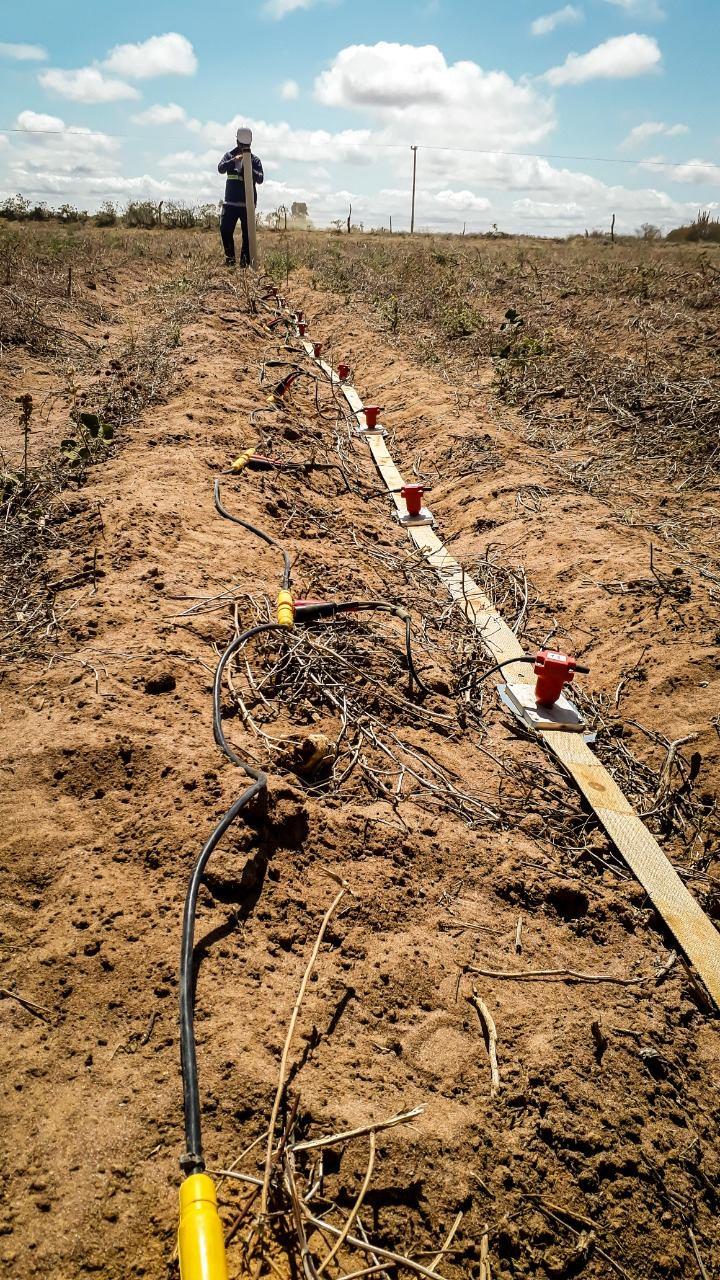
Electrical Profiling (ERT)
Shows resistivity changes along a line, as 2D sections.
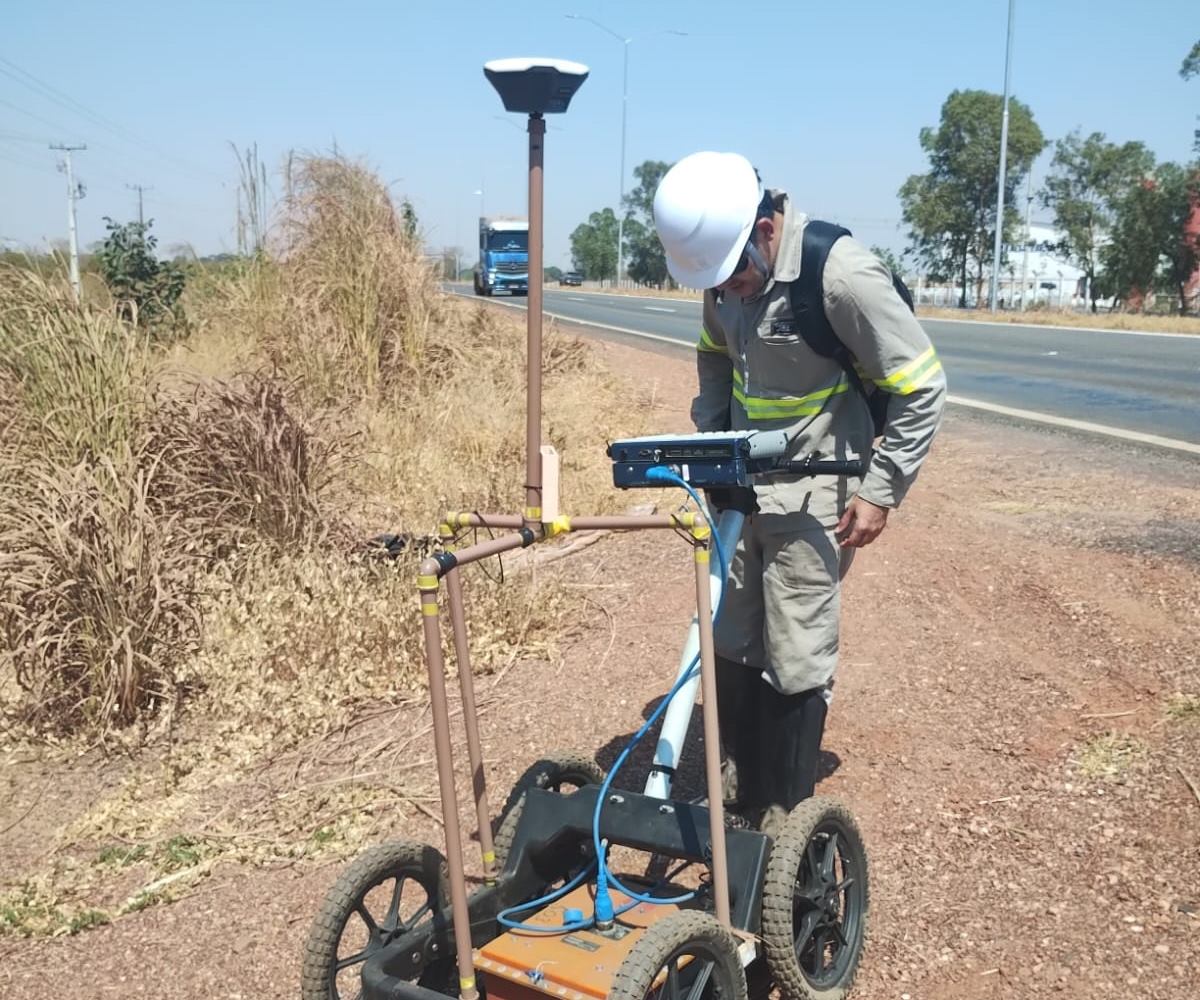
Identifies: geological contacts, faults, fractures and cavities.
Delivers: 2D resistivity sections
Complementary
Induced Polarization (IP)
Complements resistivity in telling materials apart.
Distinguishes: clays, mineralized zones and contaminated areas.
Delivers: chargeability of materials
NBR 7117-1 · NBR 15749
NBR 7117-1: soil resistivity measurement and layered soil modeling for grounding design. NBR 15749: measurement of grounding resistance and surface potentials.
Where we apply it
Applications
Transmission lines and substationsWind and solar farmsCavity investigationWater resources
On our blogSoil resistivity and grounding design: what NBR 7117-1 requiresRead article →
Other services
Let’s talk about your project
Tell us the objective, the site and the project stage. We’ll recommend the most suitable method and scope.