MASW and SPT: when geophysics complements the borehole
The SPT is the basis of nearly every foundation design in Brazil. It is simple, standardized (NBR 6484), inexpensive and familiar to every designer. It also has limits, and understanding them is the first step in deciding when it’s worth adding a geophysical method such as MASW.
What the SPT tells you, and what it doesn’t
The SPT provides a penetration resistance value (N) every meter and a soil sample for classification. It is direct information, but with two limitations:
- It is a point measurement. A borehole describes the ground where it was drilled. Between two boreholes, conditions are estimated by interpolation. On sites with lateral variation, such as paleochannels, irregular bedrock or fills, that estimate can fail.
- It measures strength at large strains. The N value reflects soil failure around the sampler. Foundation settlement in service, however, depends on soil stiffness at very small strains.
What MASW adds
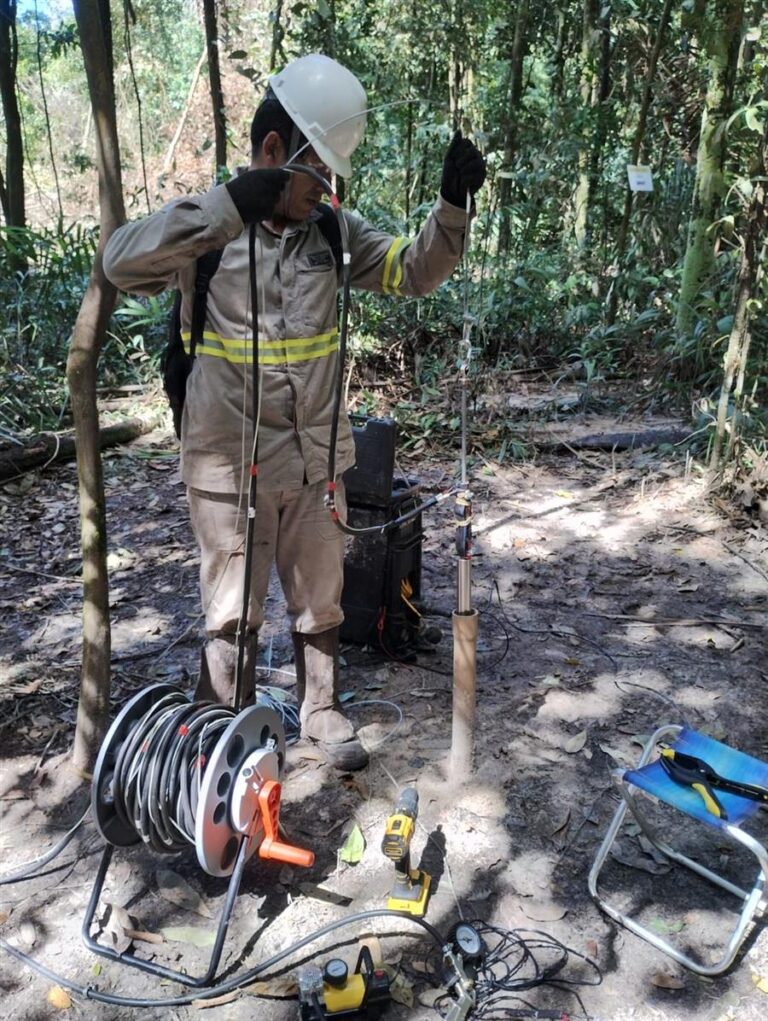
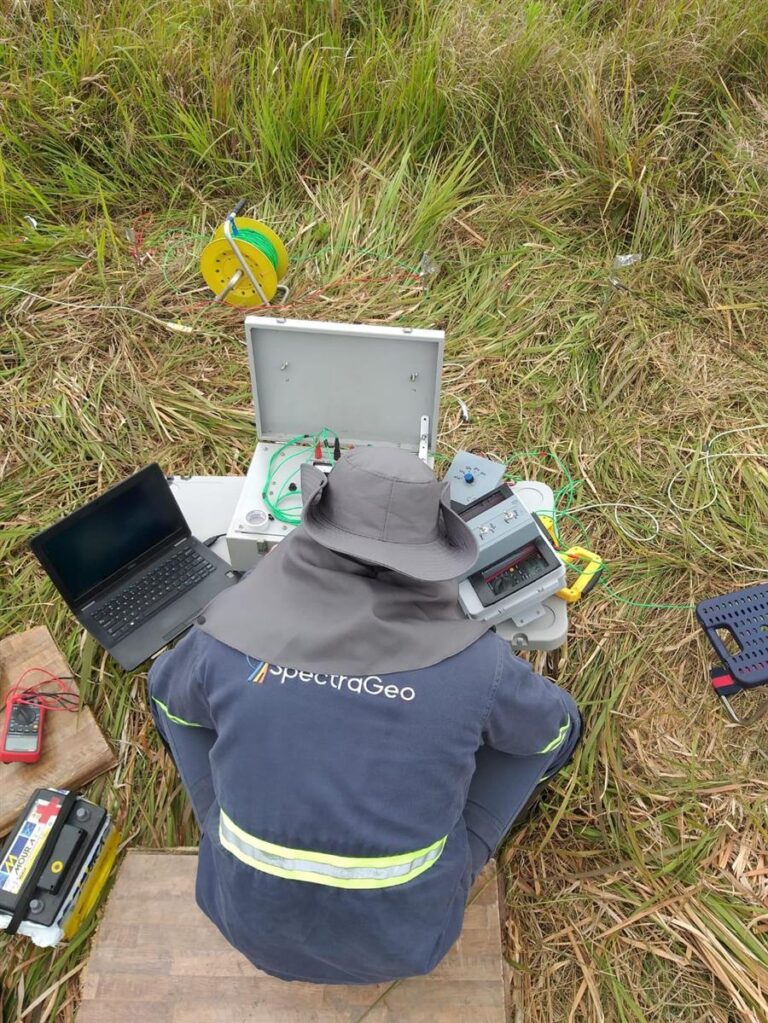
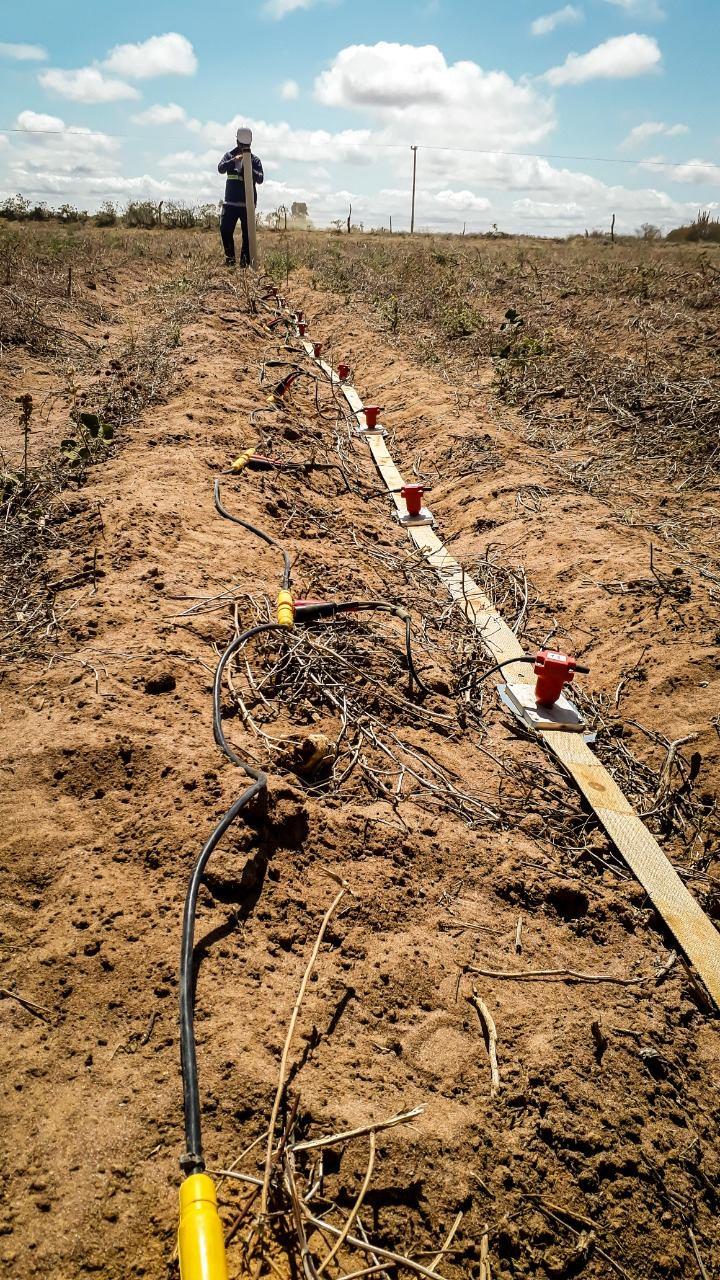
MASW (Multichannel Analysis of Surface Waves) uses a seismic source and a line of surface geophones. The result is a shear-wave velocity (Vs) profile along the line.
Vs is directly related to small-strain soil stiffness:
G₀ = ρ · Vs²
where G₀ is the small-strain shear modulus and ρ is the density.
In practice, MASW provides three things the SPT alone does not:
- Lateral continuity: a Vs section shows how the ground varies between boreholes.
- Stiffness: a parameter directly linked to foundation behavior in service.
- Coverage: being non-invasive, it covers large areas quickly.
Why use both
MASW does not replace drilling. The borehole shows what is present at each point: soil type, water level and strength. Geophysics shows how properties vary between those points. Together, they produce a more representative ground model than either one alone.
There is also a less obvious benefit: the ratio between stiffness (G₀) and strength (N) says something about soil structure. Cemented or aged soils are much stiffer than their N value suggests. Young, soft soils show the opposite. This is the subject of a SpectraGeo technical study (see our post Stiffness and strength: what the G₀/N ratio reveals about soil).
A practical example
On an industrial project, the contract required soil compaction down to 6 m. An integrated campaign with 36 SPT points, 7 DMT soundings and 50 MASW+ stations showed effective compaction only to about 3 m. The contractor acknowledged the issue and redid the work. See the full case study.
When to add MASW
- Large sites, such as wind and solar farms, land developments and industrial plants
- Areas with signs of lateral variation: irregular bedrock, fills, alluvial deposits
- Verification of earthworks and compaction
- Projects where settlement is critical and stiffness needs a more reliable estimate
Want to know whether MASW makes sense for your project? Talk to our team.